CPR and First Aid Training: A Comprehensive Approach to Life-Saving Skills
Course Description
The CPR and First Aid Training course is designed to equip participants with the critical skills and knowledge required to respond effectively in emergency situations. This comprehensive training covers the fundamentals of cardiopulmonary resuscitation (CPR), first aid techniques, and the use of automated external defibrillators (AEDs). Participants will learn how to assess emergencies, provide immediate care, and support the recovery process until professional help arrives. The course meets current guidelines from major health organizations and is ideal for both healthcare professionals and laypersons seeking to enhance their emergency response capabilities.
Learning Objectives
By the end of this course, participants will be able to:
- Understand the core principles and steps of CPR, including the use of AEDs.
- Identify common emergency scenarios and the appropriate first aid responses.
- Effectively assess and respond to medical emergencies, including cardiac arrest, choking, and trauma.
- Apply first aid techniques for injuries such as cuts, burns, fractures, and head injuries.
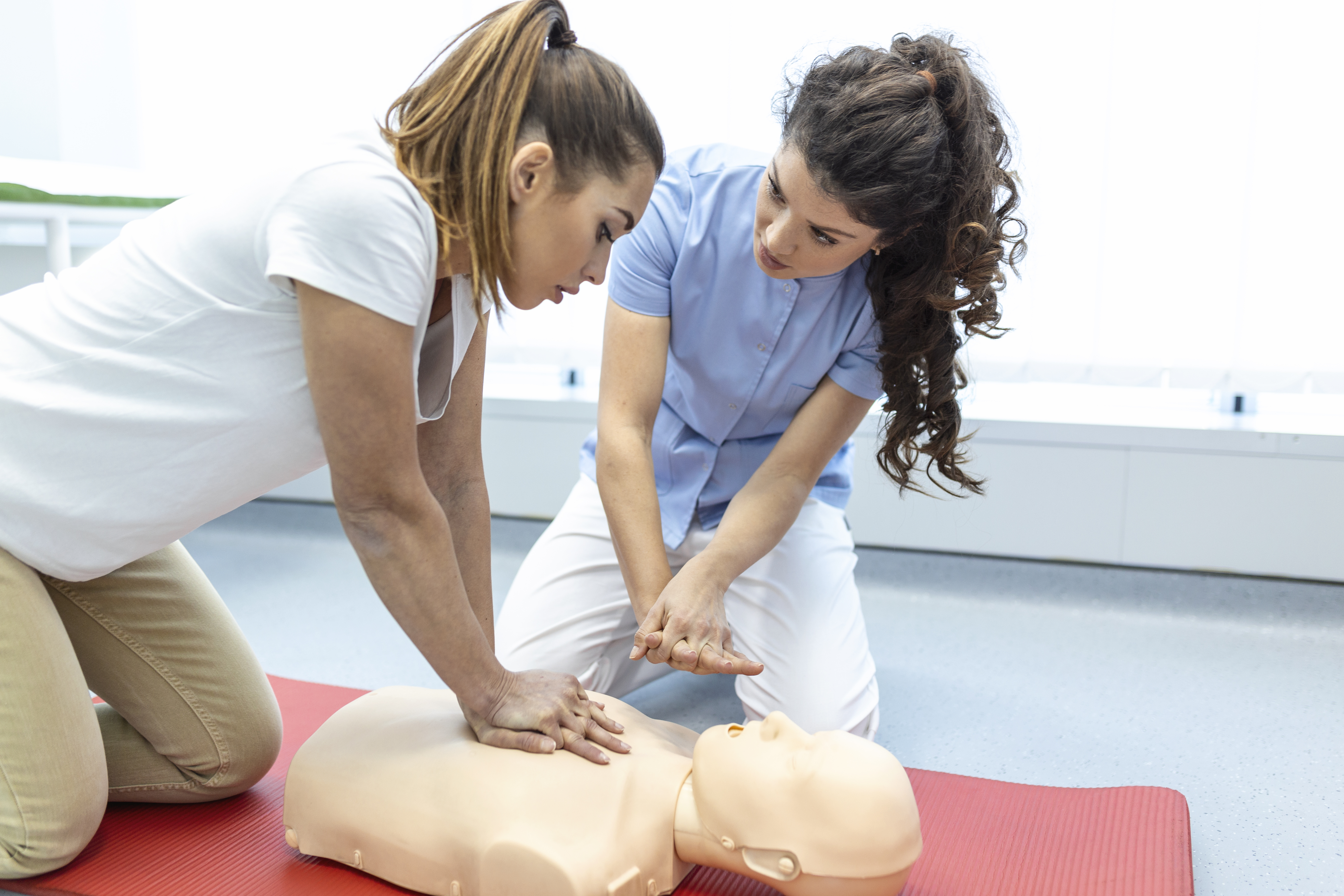
- Demonstrate proper hand placement, compression techniques, and rescue breathing.
- Communicate confidently with emergency services and provide clear, concise information during a crisis.
- Maintain a calm and controlled approach in high-stress situations.
Course Modules
Module 1: Introduction to Emergency Response
Overview of the importance of immediate care in emergencies.
Understanding the roles and responsibilities in emergency situations.
Familiarization with key first aid and CPR concepts.
Module 2: Basic Life Support and CPR
Step-by-step instruction on performing CPR for adults, children, and infants.
Proper use of an AED and understanding its safety protocols.
Hands-on practice scenarios to build muscle memory and confidence.
Module 3: First Aid Fundamentals
Techniques for managing minor injuries and medical emergencies.
How to control bleeding, stabilize fractures, and handle burns and wounds.
The importance of wound care, infection prevention, and proper bandaging.
Module 4: Emergency Response for Special Situations
Addressing choking, shock, and other life-threatening conditions.
Special considerations when assisting individuals with disabilities or chronic conditions.
Strategies for managing multiple casualties in emergency situations.
Module 5: Communication and Coordination in Emergencies
Effective communication with emergency responders.
How to relay critical information accurately and quickly.
Techniques to maintain personal calm and assist others during a crisis.
Course Features
- Interactive Lectures: Expert-led sessions with clear, step-by-step guidance on CPR and first aid.
- Hands-On Demonstrations: Practical videos and simulations to build real-world skills.
- Scenario-Based Training: Role-playing and case studies to apply learned techniques in simulated emergencies.
- Interactive Quizzes: End-of-module assessments to reinforce key concepts and measure understanding.
- Downloadable Resources: Comprehensive guides, checklists, and reference materials for ongoing review.
- Discussion Forums: Opportunities to engage with instructors and peers for additional support and clarification.
- Final Assessment: Comprehensive exam to test understanding and application of course content.
- Certification: Upon successful completion, participants will earn a Certificate of Completion.
Target Audience
- Healthcare professionals, including nurses, paramedics, and physicians.
- First responders and emergency personnel.
- Employees in high-risk industries (e.g., manufacturing, construction, education).
- Community members, teachers, and individuals seeking to be prepared for emergencies.
- Anyone interested in learning life-saving CPR and first aid techniques.
Assessment & Certification
To successfully complete the course, participants must:
- Complete all training modules, including practical simulations and interactive quizzes.
- Achieve a minimum passing score on all assessments (typically 80% or higher).
Upon successful completion, participants will receive a Certificate of Completion that meets current CPR and First Aid training requirements.
Why Take This Course?
In emergencies, every second counts. The skills taught in this course can make the difference between life and death. Whether you are a healthcare professional, a workplace safety officer, or a concerned community member, this training empowers you with the knowledge and confidence to act decisively in crisis situations. Enroll today to become proficient in CPR and first aid, and join a community committed to saving lives.
Prefer a Live Conversation?
Book a meeting with our team to discuss how Freedom Health Systems can support your organization's success — from revenue recovery to compliance and clinical excellence.